Hematopathology pre-final reports in seconds. Validated on 14,441 Genomics cases.

PathOlOgics turns CBC, blood smear findings, flow cytometry, cytogenetics and molecular results into a clinicopathologic correlation: diagnosis, prognosis and recommendations that reference the WHO 5th edition, ready for your review and sign-off.

Build a diagnosis

For healthcare professionals. No patient or user information required.

  • Validated. 51 international professors, consultants and specialists confirmed 100% medical and clerical accuracy across 14,441 Genomics-based reports.1
  • Published. Two open, peer-reviewed datasets in Scientific Data, a Nature Portfolio journal.1, 2
  • In use. More than 65,000 cases served, malignant and benign, from CBC and smear to flow cytometry and genomics.

A real case in Build Diagnosis

Built in 5 seconds

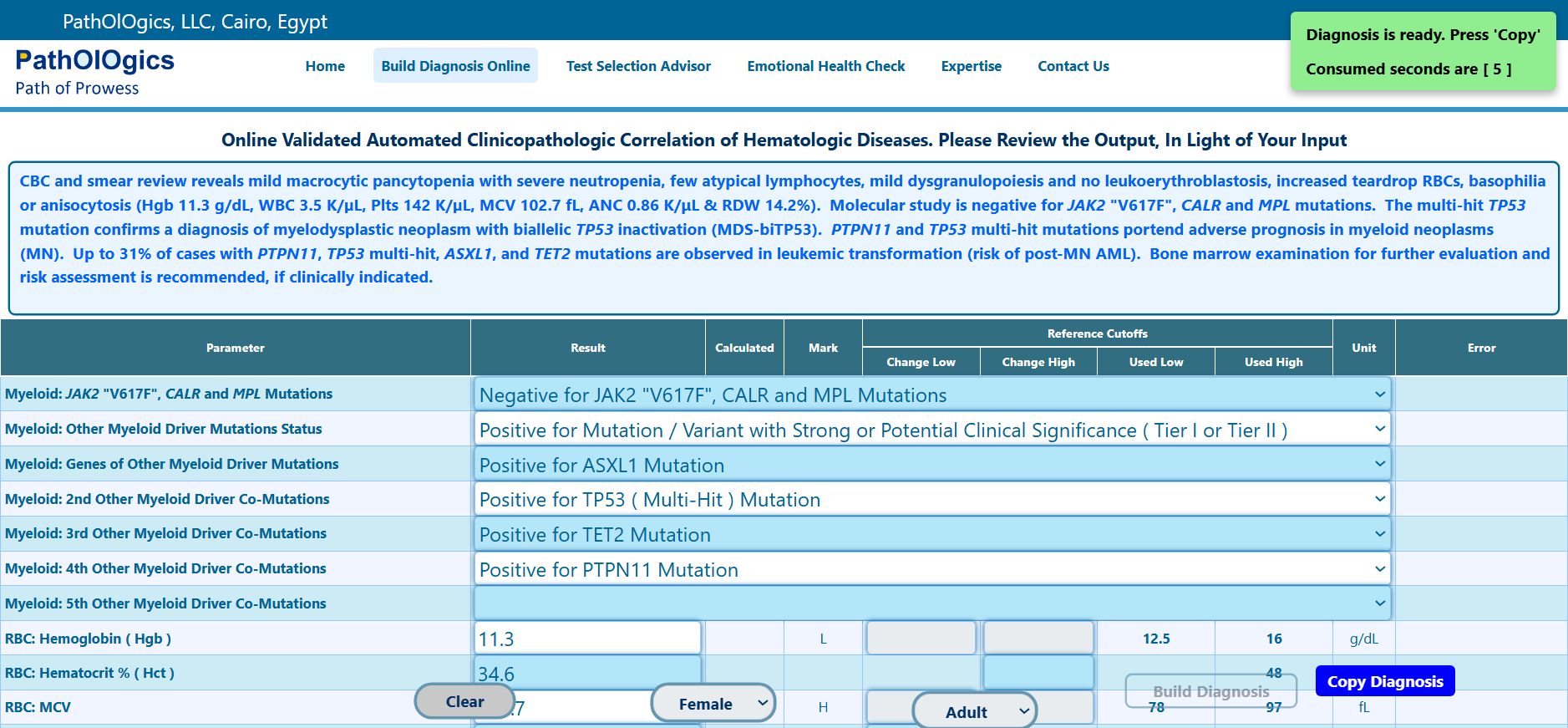
Input

Patient
Female, adult
CBC
  • Hgb 11.3 g/dL
  • WBC 3.5 K/µL
  • Plts 142 K/µL
  • MCV 102.7 fL
  • ANC 0.86 K/µL
  • RDW 14.2%
Smear
Few atypical lymphocytes, mild dysgranulopoiesis
Molecular
Negative for JAK2 V617F, CALR and MPL. Positive, tier I or II, for ASXL1, TP53 (multi-hit), TET2 and PTPN11.

Output

CBC and smear review reveals mild macrocytic pancytopenia with severe neutropenia, few atypical lymphocytes, mild dysgranulopoiesis and no leukoerythroblastosis, increased teardrop RBCs, basophilia or anisocytosis (Hgb 11.3 g/dL, WBC 3.5 K/µL, Plts 142 K/µL, MCV 102.7 fL, ANC 0.86 K/µL & RDW 14.2%). Molecular study is negative for JAK2 "V617F", CALR and MPL mutations. The multi-hit TP53 mutation confirms a diagnosis of myelodysplastic neoplasm with biallelic TP53 inactivation (MDS-biTP53). PTPN11 and TP53 multi-hit mutations portend adverse prognosis in myeloid neoplasms (MN). Up to 31% of cases with PTPN11, TP53 multi-hit, ASXL1, and TET2 mutations are observed in leukemic transformation (risk of post-MN AML). Bone marrow examination for further evaluation and risk assessment is recommended, if clinically indicated.

Please review the output in light of your input.
Who it helps

  • Pathologists and hematologists

    Pre-final reports that reference the WHO 5th edition, ready for your review and sign-off.

    Build a diagnosis
  • Laboratory directors

    Increase productivity, reduce liability and maximize quality. Reduce workload for senior physicians and lower training friction.

    See reported outcomes
  • Health-system IT

    FHIR plugins, HL7 connectors and a REST API for your LIS or EHR. PHI stays in your environment.

    See how it connects
  • Researchers and educators

    Two open, peer-reviewed datasets: 14,441 validated clinicopathologic correlations and one million segmented red blood cells.

    Read the publications

From results to a reviewed report in three steps

  1. Auto-collect the results

    CBC, smear review findings, flow cytometry, cytogenetic, molecular tests and clinical findings. Enter them in Build Diagnosis, or use the widget inside your LIS for auto-collection and verification.

  2. Auto-Build the diagnosis

    The pre-final reports are built with reference to the WHO 5th edition, the International Consensus Classification and other publications. The same input always gives the same narrative.

  3. Review and sign-off

    The widget inside your LIS automatically puts the pre-final report into the LIS. Review the pre-final report along with the input, and sign-off.

Clinicians report about 2 minutes for a comprehensive report, down from 10 to 20.a

The platform

Online tools that are available for healthcare professionals. The work behind the first two is published in Scientific Data.

Build Diagnosis

Validated, automated, genomics-based clinicopathologic correlation for hematologic neoplasms and benign diseases. Enter CBC, smear review findings, flow cytometry, cytogenetics and NGS or PCR results; receive the diagnosis, prognosis and recommendations.

  • Auto-verification and auto-interpretation of NGS, PCR, flow cytometry, blood smear findings and CBC
  • Pre-final reports for hematopathologist review and sign-off
  • Validation published in Scientific Data, 20251
Build a diagnosis
Build Diagnosis with the case above: the generated correlation, and under it the table of entered results

AI-automated blood cell analysis

Instance segmentation and full counting of blood cells on images of manual blood smears.

  • One million segmented red blood cells, 240,000 of them classified in nine shapes2
  • Red cell morphology, including teardrop and fragmented cells, with overall accuracy above 99% and F1 score above 0.98
  • Clinical-grade analysis of manual bone marrow and blood films is in medical validation
Read the dataset paper (opens in a new tab)
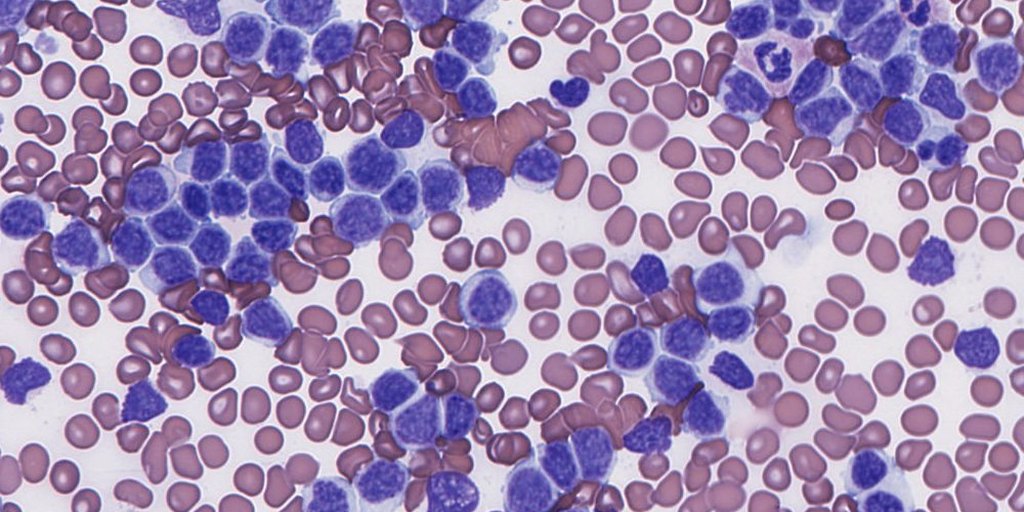
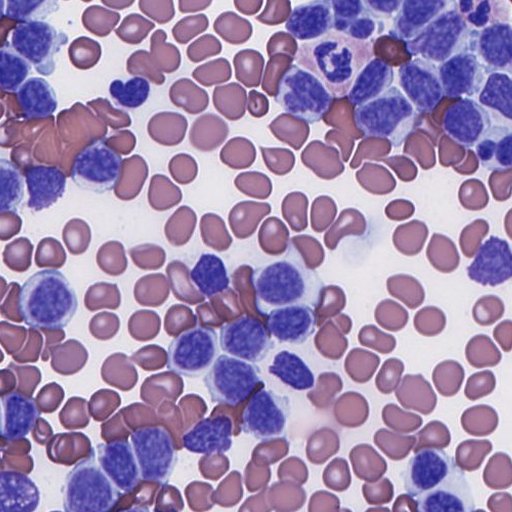
Photomicrograph of a manual blood smear: red cells and clusters of nucleated cells
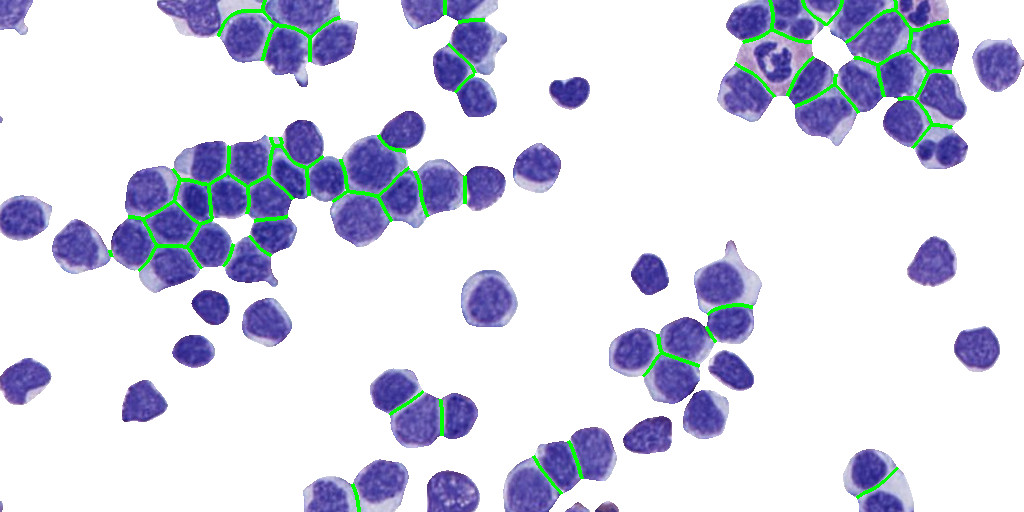
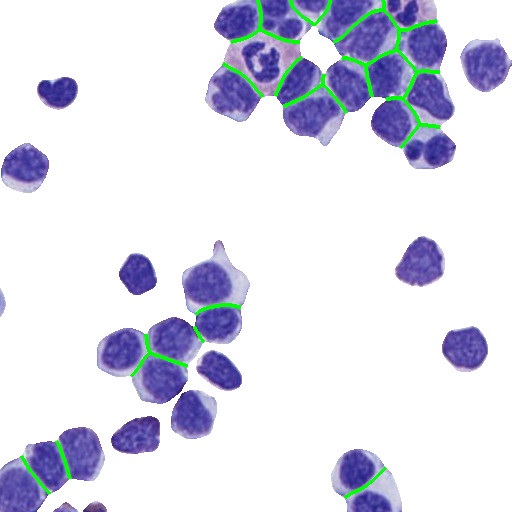
The same field after instance segmentation: every nucleated cell isolated, with touching cells separated by a line
One field of a manual blood smear, before and after instance segmentation. Drag to compare.

Validated by 51 specialists across 14,441 reports

Fifty-one international professors, consultants and specialists from multiple medical centres reviewed the set against the WHO 5th edition and confirmed 100% medical and clerical accuracy.1

The reports span acute myeloid leukemia, myelodysplastic and myeloproliferative neoplasms, chronic myeloid leukemia, MDS/MPN overlap and clonal hematopoiesis.

What the 14,441 reports contain
GroupReportsShare
Non-CML myeloid neoplasms7,883 tier I/II mutations and aberrations 4,567
Chronic myeloid leukemia257 mutations and aberrations 243
Benign or inconclusiveNGS-negative across 66 DNA and RNA genes 5,984
Synthetic genomicsNew and follow-up CML; rare and complex non-CML cases 3,647

10,794 real-world reports and 3,647 with synthetic genomics. Source: reference 1.

Publications

  1. Scientific Data, 2025

    14,441 Genomics-Based Validated Automated Comprehensive Clinicopathologic Correlations for Myeloid Neoplasms (opens in a new tab)

    Elsafty A, Ahmed Y, Halawa TF, et al. Sci Data 12, 1819. Validated by 51 international specialists against the WHO 5th edition.

  2. Scientific Data, 2024

    1 Million Segmented Red Blood Cells With 240 K Classified in 9 Shapes and 47 K Patches of 25 Manual Blood Smears (opens in a new tab)

    Elsafty A, Soliman A, Ahmed Y. Sci Data 11. AI analysis of red cell morphology, including teardrop and fragmented cells, with overall accuracy above 99% and F1 score above 0.98.

  3. European Medical Journal, 2025

    Comprehensive Myeloid Neoplasm Genomics Dataset Released (opens in a new tab)

    EMJ Hematology news. The journal expects the dataset to become “a reference model for structured reporting in myeloid neoplasms”.

48 diagnoses and 85 genomic markers

Check whether your case is covered. Search by gene, variant or diagnosis.

Try

133 entries

Diagnoses 48

Acute leukemia and other myeloid neoplasms3
  • Acute leukemia with favorable, intermediate, or adverse prognosis
  • Acute leukemic transformation of non-CML myeloid neoplasm
  • Myeloid neoplasm with favorable, poor, or adverse prognosis
Myelodysplastic neoplasms (MDS)7
  • High-grade MDS with increased blasts (MDS-IB2)
  • High-grade MDS (MDS-IB2) with mutated TP53
  • MDS with biallelic TP53 inactivation (MDS-biTP53)
  • MDS with increased blasts (MDS-IB1)
  • MDS with increased blasts (MDS-IB2)
  • MDS with low blasts (MDS-LB)
  • MDS with low blasts and SF3B1 mutation (MDS-SF3B1)
MDS/MPN overlap9
  • Accelerated phase of MDS/MPN
  • Chronic myelomonocytic leukemia (MD-CMML-1)
  • Chronic myelomonocytic leukemia (MD-CMML-2)
  • Chronic myelomonocytic leukemia (MP-CMML-1)
  • Chronic myelomonocytic leukemia (MP-CMML-2)
  • MDS/MPN with impending progression to accelerated phase
  • MDS/MPN with neutrophilia (atypical CML)
  • MDS/MPN with SF3B1 mutation and thrombocytosis
  • MDS/MPN, not otherwise specified
Myeloproliferative neoplasms (MPN)12
  • Accelerated phase of MPN
  • Chronic eosinophilic leukemia
  • Chronic neutrophilic leukemia
  • Essential thrombocythemia
  • MPN with impending progression to accelerated phase
  • MPN, not otherwise specified
  • Polycythemia vera
  • Polycythemia vera with leukocytosis
  • Polycythemia vera with superimposed iron deficiency
  • Pre-fibrotic stage of primary myelofibrosis
  • Primary myelofibrosis
  • Triple-negative essential thrombocythemia
Clonal hematopoiesis and clonal cytopenias4
  • Clonal cytopenia and monocytosis of undetermined significance
  • Clonal cytopenia of undetermined significance
  • Clonal hematopoiesis of indeterminate potential
  • Clonal monocytosis of undetermined significance
Secondary cytopenias and cytoses13
  • Secondary anemia
  • Secondary erythrocytosis
  • Secondary thrombocytopenia
  • Secondary thrombocytosis
  • Secondary leukopenia
  • Secondary leukocytosis
  • Secondary neutropenia
  • Secondary neutrophilia
  • Secondary lymphopenia
  • Secondary lymphocytosis
  • Secondary monocytosis
  • Secondary eosinophilia
  • Secondary basophilia

Genomic markers 85

Gene mutations37
  • ASXL1
  • BCOR
  • CALR
  • CBL
  • CEBPA
  • CSF3R
  • DNMT3A R882
  • DNMT3A, other
  • ETV6
  • EZH2
  • FLT3
  • GATA2
  • IDH1
  • IDH2
  • IKZF1
  • JAK2 exon 12
  • JAK2 V617F
  • JAK3
  • KIT
  • KRAS
  • MPL
  • NF1
  • NPM1*
  • NRAS
  • PHF6
  • PTPN11
  • RUNX1
  • SETBP1
  • SF3B1
  • SRSF2
  • STAG2
  • TET2
  • TP53 multi-hit
  • TP53 single, VAF below 50%
  • U2AF1
  • WT1
  • ZRSR2
Gene fusions5
  • CBFB::MYH11
  • DEK::NUP214
  • MLLT3::KMT2A
  • PML::RARA
  • RUNX1::RUNX1T1
BCR::ABL1 kinase domain mutations29
  • D276G
  • E255K
  • E255V
  • E279K
  • E292L
  • E292Q
  • F317C
  • F317I
  • F317L
  • F317R
  • F317V
  • F359C
  • F359I
  • F359L
  • F486S
  • G250E
  • H396A
  • H396P
  • H396R
  • L248V
  • L384M
  • M244V
  • M351T
  • Q252H
  • Q252R
  • T315A
  • T315I
  • V299L
  • Y253H
Additional chromosomal abnormalities in CML14
  • 11q23 rearrangement
  • 3q26.2 rearrangement
  • 7q deletion
  • 7q duplication
  • 7q translocation
  • Complex abnormalities (3 or more chromosomal abnormalities)
  • Extra Philadelphia chromosome
  • Isochromosome 17q
  • Low-risk secondary chromosomal abnormalities
  • Monosomy 7
  • Trisomy 17
  • Trisomy 19
  • Trisomy 21
  • Trisomy 8

Works inside your LIS and EHR

Input data are collected and diagnostic narratives returned automatically.

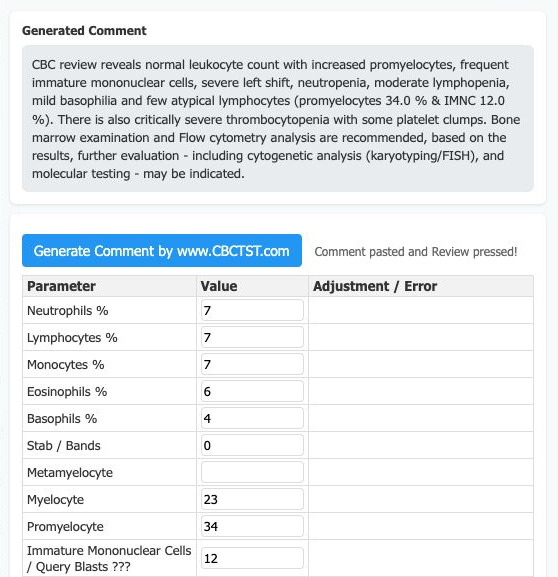
The PathOlOgics widget inside a laboratory information system: a generated comment above the differential values it was built from
The PathOlOgics widget inside a laboratory information system, on a test patient.

One click inside your LIS

  1. The widget opens on the result and lists each parameter with its value.
  2. Generate Comment builds the narrative.
  3. The comment is pasted into the LIS and Review is pressed.
The comment generated in the widget shown

CBC review reveals normal leukocyte count with increased promyelocytes, frequent immature mononuclear cells, severe left shift, neutropenia, moderate lymphopenia, mild basophilia and few atypical lymphocytes (promyelocytes 34.0 % & IMNC 12.0 %). There is also critically severe thrombocytopenia with some platelet clumps. Bone marrow examination and Flow cytometry analysis are recommended, based on the results, further evaluation - including cytogenetic analysis (karyotyping/FISH), and molecular testing - may be indicated.

Connect

  • FHIR plugins for EMRs
  • HL7 connectors for LIS
  • REST API for custom workflows
  • Web extensions, mobile apps and agents

Automate

  • Auto-verification and auto-interpretation of NGS, PCR, flow cytometry, blood smear findings and CBC
  • Genomics-based comprehensive clinicopathologic correlations
  • Pre-final reports for hematopathologist review and sign-off

Protect

Discuss an integration

For hospitals, health systems and clinics, reference and high-volume diagnostic laboratories, academic medical centres and teaching hospitals.

What clinicians report

“Achieved the quality of senior hematopathologists in NYC”

Elena Agranovsky, Senior Hematopathologist
Time to a comprehensive report
2 minutes, down from 10 to 20a
Laboratory productivity
Up to 200% highera
Cost against manual workflows
About 60% lowerb
  • Productivity

    “Increased productivity in labs by up to 200%”

    Maryana Gumenyak, Lab Director
  • Diagnosis time

    “Reduced time for comprehensive diagnosis report from 10-20 minutes to 2 minutes”

    Samah Ali, Junior Pathologist
  • Training

    “Assisted in training junior physicians”

    Amira Soliman, Professor of Medicine
  • Staffing

    “Helped overcome shortage in the lab”

    Samir Nabhan, Operational Manager
  • Risk management

    “Prevented medical errors”

    Hatem Alahwal, Consultant Hematology
  • Profitability

    “Increased profitability and reduced costs”

    Manal Othman, Lab Director

a. Reported by clinicians quoted on this page. b. Company estimate. Results vary by workflow.

Questions clinicians ask first

What is PathOlOgics?

PathOlOgics is an online platform that automatically builds clinicopathologic correlations for hematologic diseases. From CBC, blood smear findings, flow cytometry, cytogenetics and molecular results it builds a diagnosis, prognosis and recommendations for a hematopathologist to review and sign.

How was it validated?

Fifty-one international professors, consultants and specialists from multiple medical centres reviewed 14,441 of its reports for myeloid neoplasms against the WHO 5th edition and confirmed 100% medical and clerical accuracy. The dataset is published in Scientific Data (2025).

Does it replace the pathologist?

No. PathOlOgics produces a pre-final report automatically. A hematopathologist reviews and signs it out.

What does it cover?

Acute myeloid leukemia, myelodysplastic neoplasms, myeloproliferative neoplasms, chronic myeloid leukemia, MDS/MPN overlap, clonal hematopoiesis, and secondary cytopenias and cytoses: 48 diagnoses and 85 genomic markers in all. Lymphoid malignancies are in medical validation.

What patient information does it need?

None for the online tools: you enter findings, not identities. In an integrated deployment, patient data stays in your environment.

How does it connect to an LIS or EHR?

Through HL7 connectors for laboratory information systems, FHIR plugins for electronic medical records and a REST API for custom workflows.

Talk to the team

Tell us about your laboratory. We reply within 3 days, in English, French or Arabic, on technical and medical questions alike.

Build a diagnosis
Contact
Contact page
Headquarters
21 Al Nasr Street, Nasr City, Cairo, Egypt
Executive lead
Ahmed Elsafty, CEO. About PathOlOgics

PathOlOgics provides diagnostic and prognostic support for healthcare professionals. Reports are pre-final: please review the output in light of your input before sign-off.

PathOlOgics overview